Brussels Day Tours
I’m Serious Day Tour Man AI, your day trip expert. Ask me anything — where to go, how to get there, and what’s actually worth your day.
Brussels sits at the center of the densest day-trip rail web in Europe: the most influential painting in Western art hangs thirty minutes away behind bulletproof glass, Rubens’ city is forty-five, and the battlefield that ended Napoleon is a suburban train ride. Everything here works by rail, and half of it works better that way.
One register note: the Flanders Fields day visits the Great War’s most concentrated ground, and it closes each evening with a ceremony that has run nightly for nearly a century — it gets the sober treatment below. The city block handles the Grand Place, the frites-and-waffle truth, and the beer rules.
Here’s what’s worth a day, with real times and honest trade-offs.

Popular Day Trips
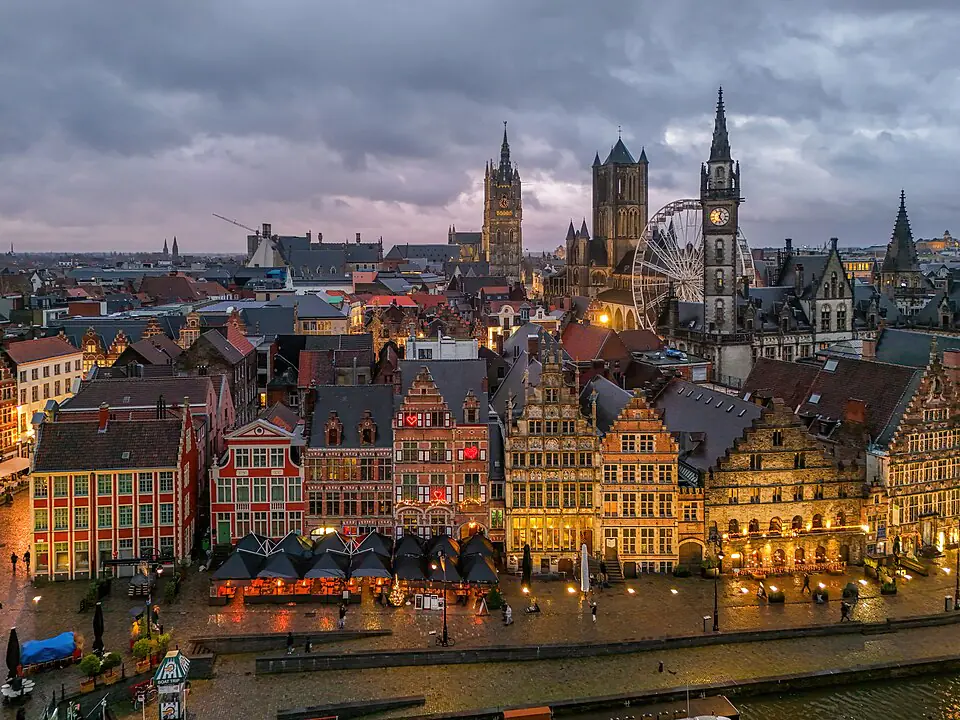
Ghent
The 35-Minute Train, the Mystic Lamb’s Timed Slot
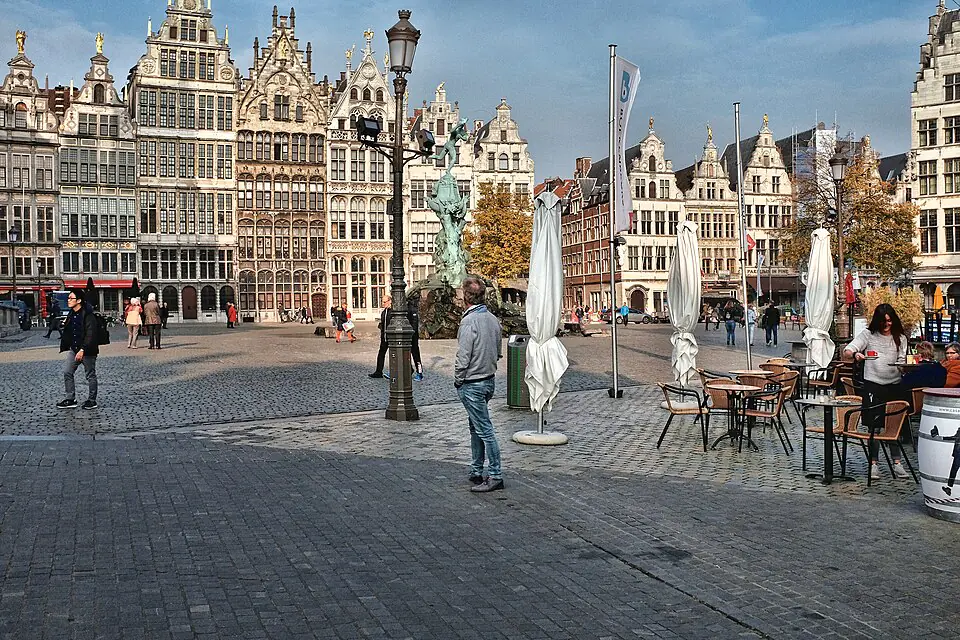
Antwerp
The Station Worth Arriving For, the Rubens Truth
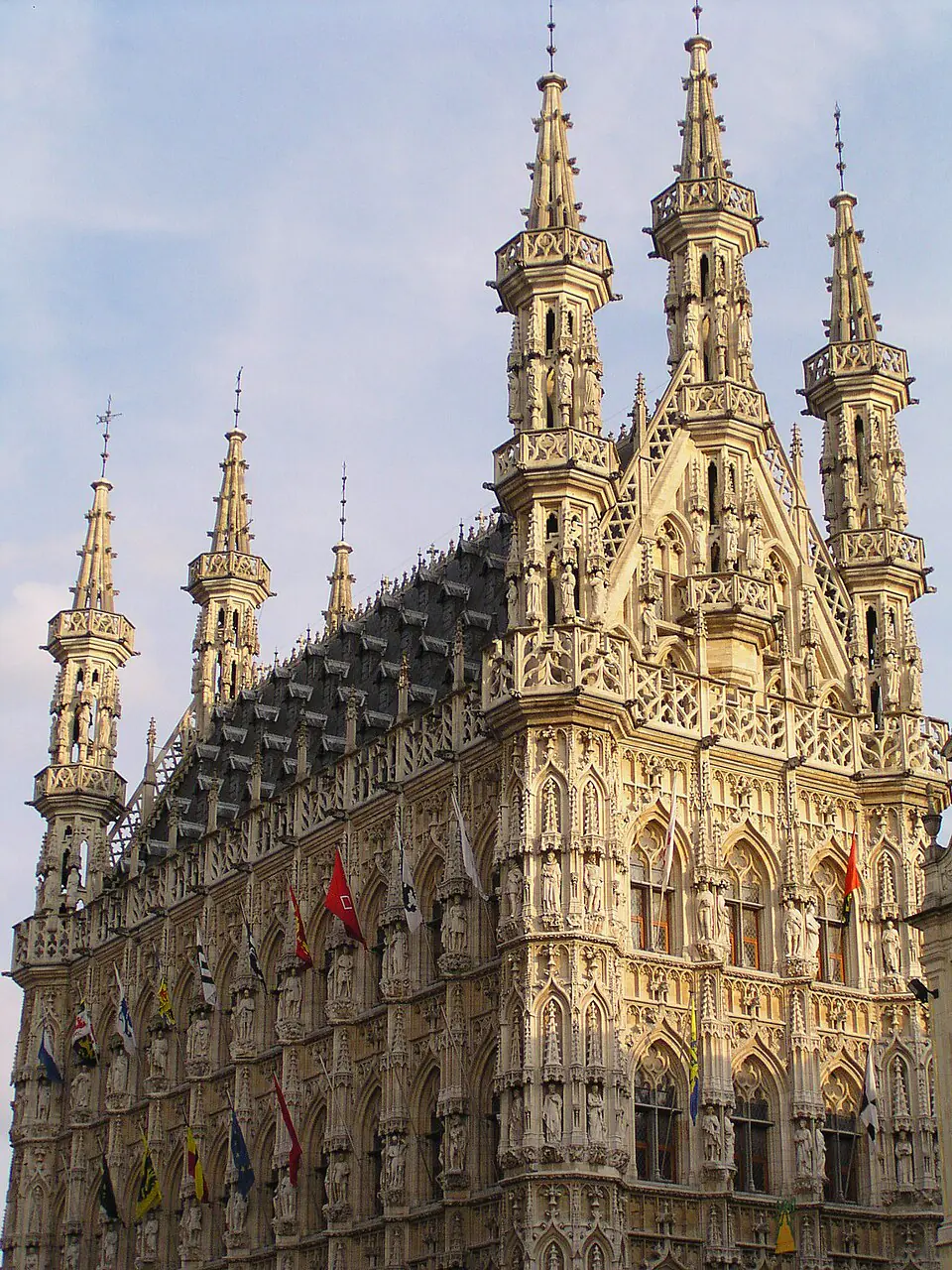
Leuven
The Oldest University in the Low Countries, 236 Statues
Ghent — The Mystic Lamb and the Living City
Thirty minutes northwest, Ghent pairs a masterpiece with a city that never became a museum. The masterpiece first, with its mechanics: the Ghent Altarpiece — the Van Eyck brothers’ 1432 Adoration of the Mystic Lamb, plausibly the most influential painting ever made and certainly the most stolen — sits in St Bavo’s Cathedral behind glass, and while the cathedral is free, the Altarpiece visitor centre runs timed tickets that sell out on weekends and holidays: book online ahead. The AR crypt tour (about an hour, nine languages) tells the theft-war-and-rescue saga — the Monuments Men recovery, the still-missing Just Judges panel — and justifies its premium; note the long restoration campaign has been finishing in phases, so some upper panels may be displayed at the Museum of Fine Arts, where watching the restorers work is its own show.
The city around it holds the day easily: the Gravensteen castle’s moody keep (with a famously irreverent audio guide), the Graslei and Korenlei quaysides for the medieval-harbor postcard, St Michael’s Bridge at dusk for the three-tower alignment, and Werregarenstraat — the sanctioned graffiti alley — for the counterpoint. Ghent is a student city with Bruges’ looks and none of its coach crowds, which is the real trade: day-trippers who can take only one Flemish city should weigh exactly that trade.
Read the full Ghent day-trip page.
Antwerp — Rubens, Diamonds & the Cathedral of Trains
Forty-five minutes north, Antwerp announces itself before you leave the station: Antwerpen-Centraal’s gilded dome and stacked platforms are routinely ranked among the world’s most beautiful railway buildings, and arriving is the first sight.
The Rubens layer runs deep: the Cathedral of Our Lady hangs four of his monumental altarpieces beneath Belgium’s tallest spire (the Descent from the Cross is the one that stops rooms), and the Rubens House — the master’s Italianate palazzo, studio, and garden — reopens its restored self to timed tickets; check current status when booking, as its long renovation has been phasing back open. The KMSKA, the royal fine-arts museum, holds the broader Flemish bench after its own decade-long rebuild.
The rest sorts by taste: the diamond district’s synagogue-and-shopfront blocks (85 percent of the world’s rough diamonds still pass through), the MAS museum’s spiral escalators to a free rooftop panorama, the Grote Markt’s guild houses, and the hand-throwing fountain legend that named the city. Fashion people add the MoMu and the Nationalestraat axis; families add the zoo beside the station — one of Europe’s oldest and best-kept. The frites here come with the city’s own swagger; Antwerp considers itself Belgium’s capital of everything, and a day here explains the confidence.
Read the full Antwerp day-trip page.
Ypres & Flanders Fields — The Nightly Promise
An hour and a half west, the Ypres Salient holds the Great War at its most concentrated: half a million dead in the few miles around a town that was shelled to powder and rebuilt brick by brick, medieval cloth hall included. The day keeps its register — unhurried, informed, and paired with nothing flippant.
The anchor points: In Flanders Fields Museum, in the rebuilt Cloth Hall, tells the Salient with the thoroughness the ground requires. Tyne Cot, the largest Commonwealth cemetery in the world, lets its 12,000 headstones and 35,000 carved names do the arithmetic no exhibit can. Langemark’s German cemetery, dark-stoned and oak-shaded, completes the picture with its mass graves; Essex Farm preserves the bunkers where John McCrae wrote the poem the region is named for.
The ceremony that frames everything: at 8 p.m., every evening, buglers of the Last Post Association sound the Last Post under the Menin Gate — the memorial arch carrying 54,000 names of the missing — as they have nightly since 1928, interrupted only by occupation. Attending it is the day’s correct ending: arrive early, stand quietly, and let it be what it is. A car or a guided battlefield tour serves the scattered sites best (the guides here are exceptional); the train-plus-museum-plus-Gate day works without one. This is the most important day trip in the lineup.
Waterloo — The Morning That Ended an Era
Thirty minutes south, the field where Napoleon’s run ended on June 18, 1815, is preserved with a completeness that surprises visitors: the battlefield remains farmland, readable from above, and the Lion’s Mound — the 226-step artificial hill raised where the Prince of Orange was wounded — puts the whole day’s geometry below you, from Hougoumont’s orchard to the ridge Wellington held.
The modern telling: the Memorial 1815 museum, dug beneath the mound, runs the multimedia telling properly — the 4D battle immersion lives up to its reputation — and the restored Hougoumont farm, whose gates’ closing may well have decided the battle, completes the essential pair. Napoleon’s last headquarters at Le Caillou adds the emperor’s camp bed and death-mask footnote for completists.
The mechanics: the combined ticket covers mound, museum, panorama rotunda, and Hougoumont; the walk between mound and farm is a pleasant field kilometer; and the anniversary weekend in June brings thousands of reenactors and the year’s crowds — chosen deliberately or avoided. The frame: history-inclined visitors get one of Europe’s great battlefield days at commuter distance; the train to Braine-l’Alleud plus a short bus or walk covers it car-free.
Leuven & Mechelen — The Half-Day Pair
The two smaller cities northeast split a gentle day. Leuven, twenty-five minutes out, is Belgium’s Oxford: a university running since 1425, the flamboyant town hall so encrusted with statuary it looks piped from icing, and the Old Market square — “the longest bar in the world,” ringed entirely by café terraces and behaving accordingly after dark. The university library’s tower and carillon carry the heavier story: burned by the occupiers in 1914, rebuilt by American donations, burned again in 1940, rebuilt again — the rare monument whose reconstruction is the monument. Stella Artois runs its brewery tours at the source for the inclined.
Mechelen, ten minutes further, is the connoisseur’s stop: St Rumbold’s tower — flat-topped, cathedral-scaled, climbable via 538 steps to a skywalk with views to Brussels and Antwerp on clear days — presides over a town that was briefly the capital of the Low Countries. The carillon school here is the world’s oldest and best; time a visit to the practice hours and the bells simply happen to you. The Kazerne Dossin museum, on the site of the transit camp from which Belgium’s Jews were deported, carries its history with the gravity required — visited in the sober register, and important.
Either city is a half day; the pair by rail is a full one, and both are nearly coach-free, which is their quiet luxury.
Read the full Leuven day-trip page.
The Grand Place, the Frites Truth & Brussels Itself
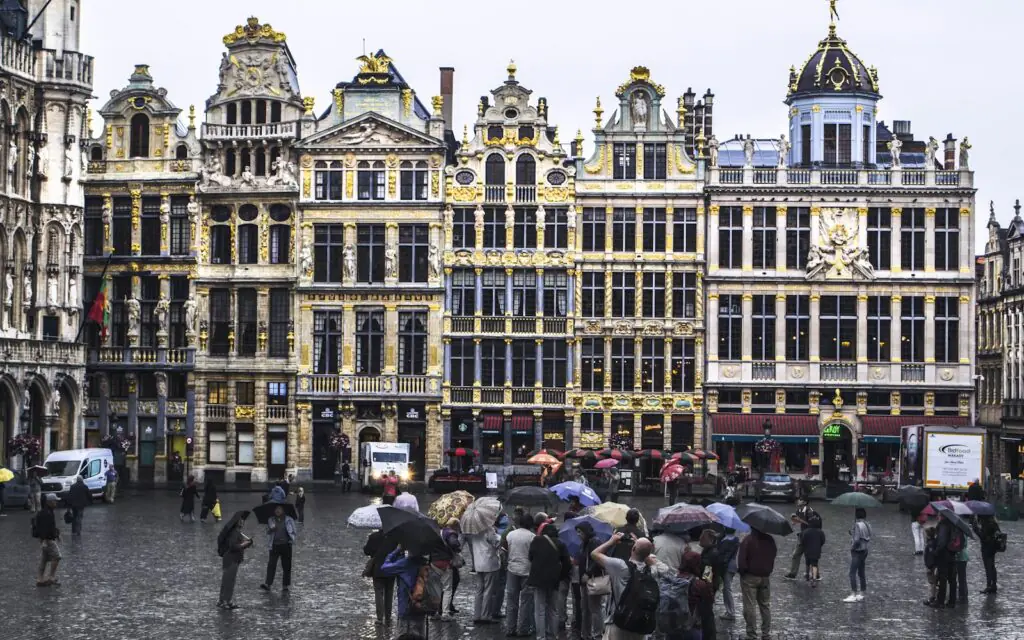
The Grand Place first: the guildhall square is the most theatrical in Europe, best entered for the first time through the small side lanes at night when the gilding is lit — and in mid-August of even-numbered years, the Flower Carpet fills it entirely. The Manneken Pis honesty, delivered plainly: he is 55 centimeters tall, perpetually mobbed, and dressed in costumes on a published calendar — see him in passing, smile, and move on; the city’s actual charms are elsewhere.
The circuit: the Galeries Royales Saint-Hubert (Europe’s first shopping arcade, chocolate flagship included), the Mont des Arts view, the Magritte Museum for the bowler-hat pilgrimage, and the comic-strip layer — the murals route through the center and the Comics Art Museum in its Horta building — that the city wears as identity. The Atomium’s spheres photograph better than they visit; the smart play is the exterior at golden hour plus the adjacent Mini-Europe for families, with the interior ticket reserved for the committed.
The eating truths: frites are a civic institution eaten from a cornet with sauce chosen under pressure (Maison Antoine and Frit Flagey are the reference friteries, and double-frying is the whole secret); the waffle comes in two species — the dense, caramelized Liège from street windows, the light rectangular Brussels on café plates — and tourist-trap versions bury both under strawberry architecture; and the beer rules are simple: every beer has its own glass, the bartender is right about the pairing, and a lambic or gueuze in a brown café is the city’s genuine taste. Season math: April–June and September are the windows, July’s Ommegang pageant dresses the Grand Place in Renaissance costume, and the EU quarter empties agreeably in August while the rest of the city carries on.
Frequently Asked Questions
Do you need tickets ahead for the Ghent Altarpiece?
Yes — the cathedral is free, but the Altarpiece visitor centre runs timed tickets that sell out on weekends and holidays. Book online, consider the hour-long AR crypt tour, and check whether any panels are still displayed at the Museum of Fine Arts’ restoration studio.
What time is the Last Post at the Menin Gate?
Every evening at 8 p.m. — sounded nightly since 1928, occupation years excepted. Arrive early, stand quietly, and let it close the Flanders Fields day; it is the region’s most moving free event.
Is Waterloo worth visiting for non-historians?
Yes — the Lion’s Mound’s 226 steps read the whole battlefield at once, and the underground Memorial 1815 museum tells it vividly. The combined ticket adds Hougoumont farm; the train to Braine-l’Alleud makes it car-free.
Ghent or Bruges from Brussels?
Bruges for the preserved-postcard perfection and the crowds that come with it; Ghent for the same medieval bones with a living student city inside them — plus the Altarpiece. With one day, most travelers who ask are happier in Ghent.
What’s the difference between the two Belgian waffles?
Liège: dense, oval, pearl-sugar caramelized, eaten warm from street windows with nothing on it. Brussels: light, rectangular, café-served with toppings. The strawberry-and-cream towers aimed at tourists flatter neither — order each one plain once.