Dinant on the Meuse
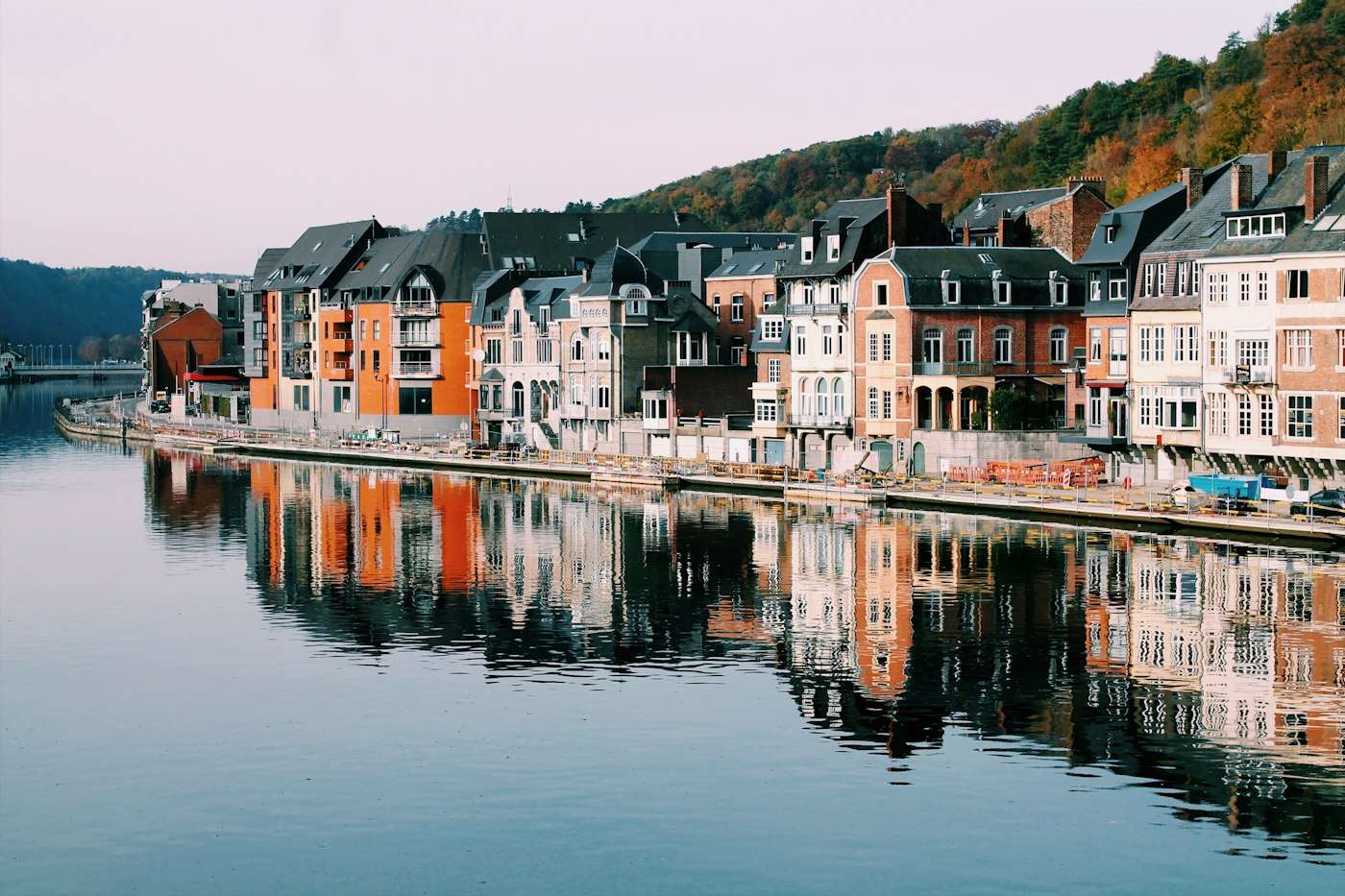
A one-street town pressed between a cliff and the Meuse, with Belgium’s most dramatic setting and its most famous invention.
The short version
- Direct trains from Brussels reach Dinant in about an hour and a half, roughly hourly — plan at belgiantrain.be; weekend returns are half price.
- The citadel tops the cliff: ride the cable car or climb the 408 steps, with one ticket covering the ride and the fortress museum.
- The Collegiate Church of Notre-Dame stands directly under the rock, its pear-shaped bell tower in every photograph the town has ever posed for.
- Adolphe Sax was born here. His birthplace museum is free, and saxophones line the bridge.
- Eat a couque de Dinant — the rock-hard honey biscuit baked here since the 1860s. Locals will tell you to let it melt, not bite it.

Getting there
Direct trains leave Brussels-Luxembourg and Schuman roughly hourly and follow the Meuse into Dinant in about an hour and a half; Belgian railways halve return fares on weekends. The station sits across the river from the citadel — the whole town presents itself the moment you cross the bridge.
The day
Dinant stacks vertically: river, church, cliff, citadel. The fortress covers the town’s military centuries, and it tells the hardest chapter plainly — in August 1914, German troops shot 674 townspeople here, and the museum gives the memory its full weight. Below, the Collegiate Church’s Gothic nave holds one of Europe’s largest stained-glass windows. The Maison de Monsieur Sax honours the local instrument-maker whose name went onto the saxophone, free and small. Boats run the Meuse past the Bayard Rock — the split pillar of stone that legend blames on a giant horse’s hoof — and the Leffe brewery museum covers the abbey beer born a few minutes upstream.
When to go
April to October keeps the boats running and the terraces open; summer weekends bring Belgian and Dutch day-trippers, so aim early. Winter strips the town to its stone and river — quiet, short days, citadel still open.
Frequently Asked Questions
How do you get from Brussels to Dinant?
Direct train from Brussels-Luxembourg or Schuman, about an hour and a half, roughly hourly. Weekend return tickets are half price.
Cable car or the 408 steps?
One ticket covers the citadel either way. The comfortable pattern is cable car up, steps down — the staircase lands beside the church.
What happened here in 1914?
On 23 August 1914, German troops executed 674 civilians in Dinant — one of the war’s worst atrocities in Belgium. The citadel museum tells it directly, and the town keeps the memory visible.
What is the saxophone connection?
Adolphe Sax, the instrument’s inventor, was born in Dinant in 1814. His birthplace museum is free, and sax sculptures decorate the Charles de Gaulle bridge.
What is a couque de Dinant?
A hard biscuit of flour and honey pressed into carved wooden moulds, baked in town since at least the 1860s. It is meant to dissolve slowly — biting it is the tourist’s mistake.