Antwerp from Brussels: The Station Worth Arriving For, the Rubens Truth, and the Free Rooftop
Forty minutes north, Belgium’s second city opens with the most beautiful railway station in Europe and holds its Rubens where he painted for eternity — the cathedral. The famous house museum, honestly, is shut.
The short version
- Trains run Brussels to Antwerp Central in 40–50 minutes at metro frequency on ordinary fares — times at belgiantrain.be — and the station itself, a gilded 1905 railway cathedral stacked four platform-levels deep, is the itinerary’s first entry.
- The Rubens House — the painter’s Italianate palazzo — is closed for a multi-year renovation; its garden and new visitor building carry a reduced program, so check current status if the house was your pilgrimage, and let the cathedral carry the paint.
- The Cathedral of Our Lady holds four Rubens masterworks in situ — The Raising of the Cross and The Descent from the Cross the anchors — under Belgium’s tallest spire, for a ticket around €12–13 that the alarm already endorsed.
- The MAS museum stacks its red-sandstone spiral above the old docks with a free escalator route to the rooftop panorama — city, port, and river in one turn — galleries optional and ticketed.
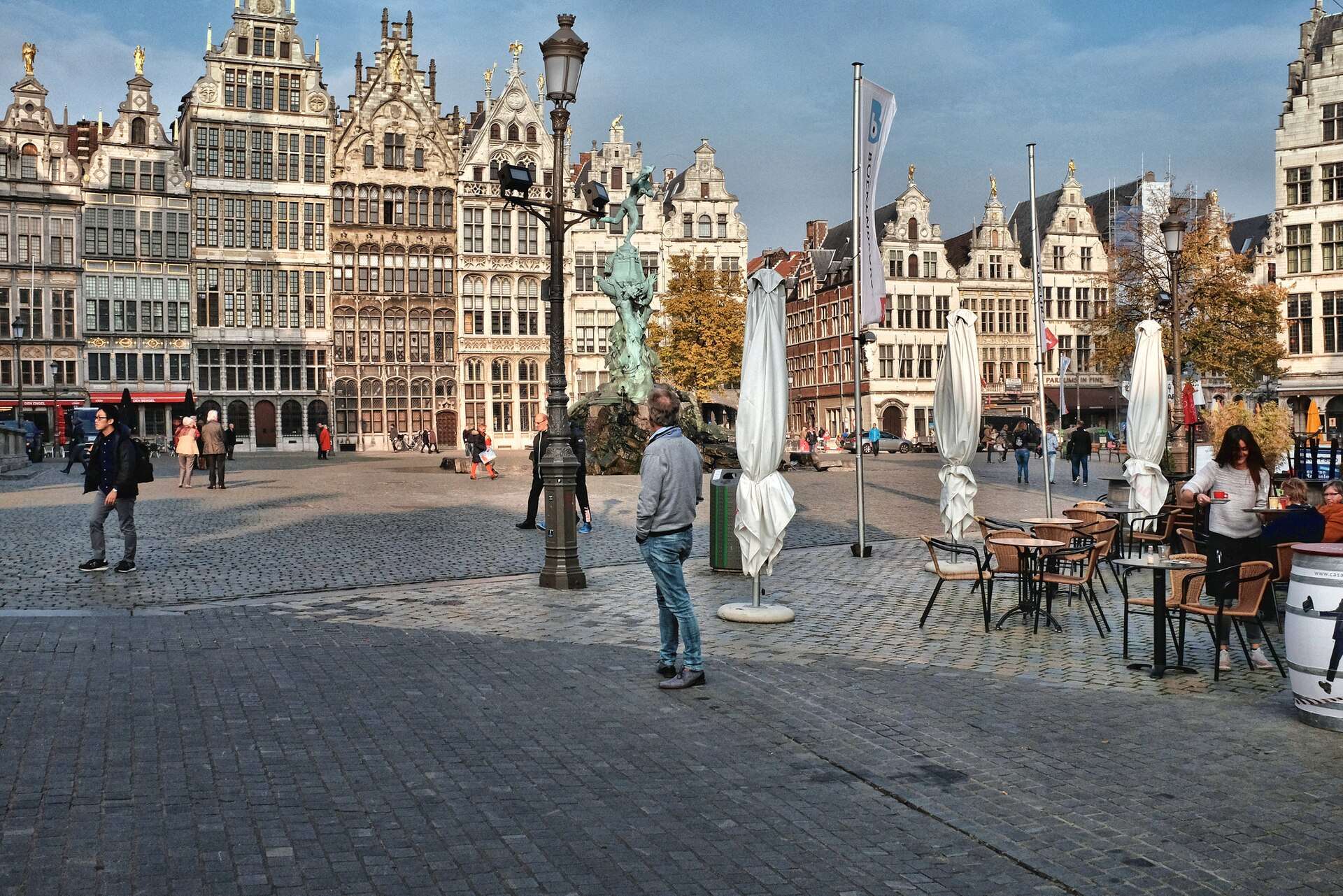
- The Grote Markt’s guild-house gold, the Brabo fountain’s severed-hand legend (the city’s name explains itself), and the riverside Steen fortress line the historic spine.
- Antwerp’s supporting cast runs deep: the world’s diamond quarter beside the station, the Plantin-Moretus printing house (UNESCO, and the world’s oldest printing presses), frites at unapologetic stands, and the bolleke of De Koninck as the local glass.

Getting there
Every Brussels main station feeds the Antwerp line at commuter density; ride to Central, not Berchem, for the arrival the alarm scripted — dome, gold, marble stair, and the diamond district glittering at the exits. The historic center runs a flat fifteen minutes west along the Meir shopping mile toward cathedral and river. No bookings needed anywhere in the standard day; the Plantin-Moretus and MAS galleries sell at the door outside rare exhibition peaks.
The day
Station gawking first, per the alarm — then the Meir’s walk west with the cathedral spire as compass. The cathedral takes its ninety minutes properly: the two great triptychs in the transepts, painted for this building and hanging where Rubens intended, plus the Madonna and the Resurrection completing the four — in-situ Rubens at a concentration the closed house never matched. Lunch off the Grote Markt (the frites stand versus white-tablecloth question answers itself by weather), then the Brabo legend, the Steen’s river terrace, and the walk or tram north to the MAS: rooftop free at the alarm’s golden hour, the docks’ regeneration spread below. The Plantin-Moretus fills the remaining art appetite with Gutenberg-era presses and Rubens portraits of the printers — the quiet UNESCO ticket tourists skip. Dinner runs Flemish (stoofvlees, the bolleke) before the constant trains home; the fashion district’s boutiques absorb any shopping remainder.
When to go
Antwerp works year-round — the station, cathedral, and museums ignore weather, and the terrace culture switches on April through October. Summer adds festival programming and full riverside benches; Advent lights the Grote Markt into its market season. Monday closes several museums (the cathedral holds its own schedule around services) — the one day worth checking before boarding. Golden hour at the MAS runs by the sun, not the calendar; the alarm delegates the timing to you.
Frequently Asked Questions
When does the Rubens House reopen?
The renovation is a years-long project with the full reopening timeline announced in stages — the garden and visitor pavilion operate meanwhile. Check the museum’s site if the house itself is your reason; this page’s honest position is that the cathedral outranks it regardless while the paint hangs in situ.
Is the cathedral ticket really worth it?
Two of the greatest altarpieces in northern European art, in the building they were painted for, under the spire that defines the city — yes, and the alarm called it the day’s best money on arrival. Allow the full ninety minutes; the audio guide is worth its add.
What’s the severed-hand story?
Legend has the giant Antigoon taxing the river and taking boatmen’s hands until the hero Brabo took his — and threw it (‘hand werpen’) into the Scheldt, naming the city. The fountain re-enacts it in bronze; the cookie shops sell the hands in shortbread and chocolate.
Antwerp or Ghent from Brussels?
Ghent (documented on this network) for canals, the Altarpiece, and medieval concentration; Antwerp for the station, Rubens in situ, port-city scale, and fashion. Both run under an hour; art pilgrims split by Van Eyck versus Rubens and are correct either way.
Is the diamond district worth wandering?
As five minutes of armored-window sociology beside the station, sure — the trade runs behind doors, not displays. Buyers should know their business; browsers do better at the MAS rooftop, which charges nothing and sparkles wider.